The Not So Mysterious Case of the Vanishing Tiger Beetles of Willcox Lake
Two unique tiger beetles inhabiting the Willcox Basin of southeastern Arizona may soon become extinct because of depletion of groundwater by large scale dairy cow operations and commercial farming

Inhabited by 17 of the 153 subspecies (=116 species) of North American Cicindela commonly known as tiger beetles, the Willcox basin in Arizona has one of the highest diversities per area of these animals on Earth. Many species of tiger beetles are very sensitive to any changes in their environment, and in addition to their ecological importance, they are widely recognized by scientists as valuable indicators of human disturbance to their habitats.
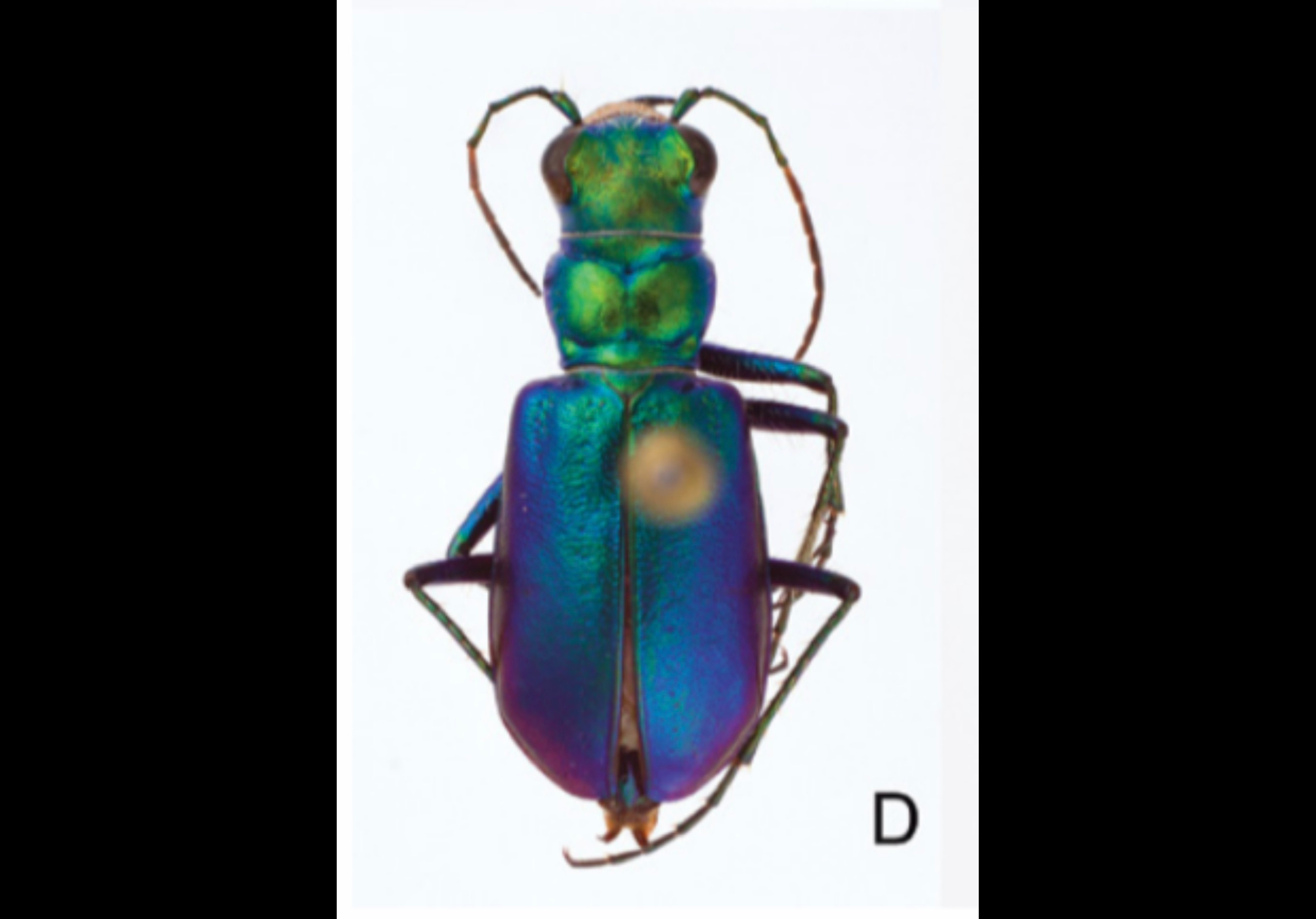
Figure 1. The tiger beetles living in the Willcox basin in Arizona’s Sulphur Springs Valley including the Cochise tiger beetle (Cicindela pimeriana). It’s found only in the Willcox basin and the adjacent Animas Valley in southeastern New New Mexico.
Some Cicindela are widespread in the western United States, but two tiger beetles are found only in the Willcox basin. They are the Sulphur Springs tiger beetle and the Willcox Playa tiger beetle. These animals are in imminent danger of extinction primarily because of the depletion of groundwater for commercial dairy cow facilities (=concentrated animal feed operations or CAFOs), large scale farms growing nut trees, alfalfa and other crops, along with the associated effects on surface geomorphological features.
Tiger beetles, like their mammalian namesake, are highly active fast moving predators who use their large eyes to find, six legs to rapidly run down, and sharp mandibles to capture flies, ants, beetles, and other invertebrates. The predatory grub-like larvae live in vertical burrows they dig in the soil. Many species of tiger beetles are restricted to specific habitats or locations. They are often extremely sensitive to the activities of humans - urban development, pesticides, agriculture, human-caused global climate change, and other forms of habitat destruction. Because of their precarious status, the U.S. Fish and Wildlife Service placed four tiger beetles on the Endangered Species Act.
Ice Age Lakes
During the frigid glacial cycles of the Pleistocene Epoch which lasted from about 2.5 million years to 10,000 years ago, massive pluvial lakes formed throughout western North America. Some were as large as the current day Great Lakes. Among the most well known was Lake Bonneville located in present day Utah; the tiny remnant is now called the Great Salt Lake, and its 950 square miles is a fraction of the size of its former 19,200 square miles. During periods when temperatures grew warmer and the glaciers retreated (=interglacial cycles), the ice age lakes dramatically shrunk in size.
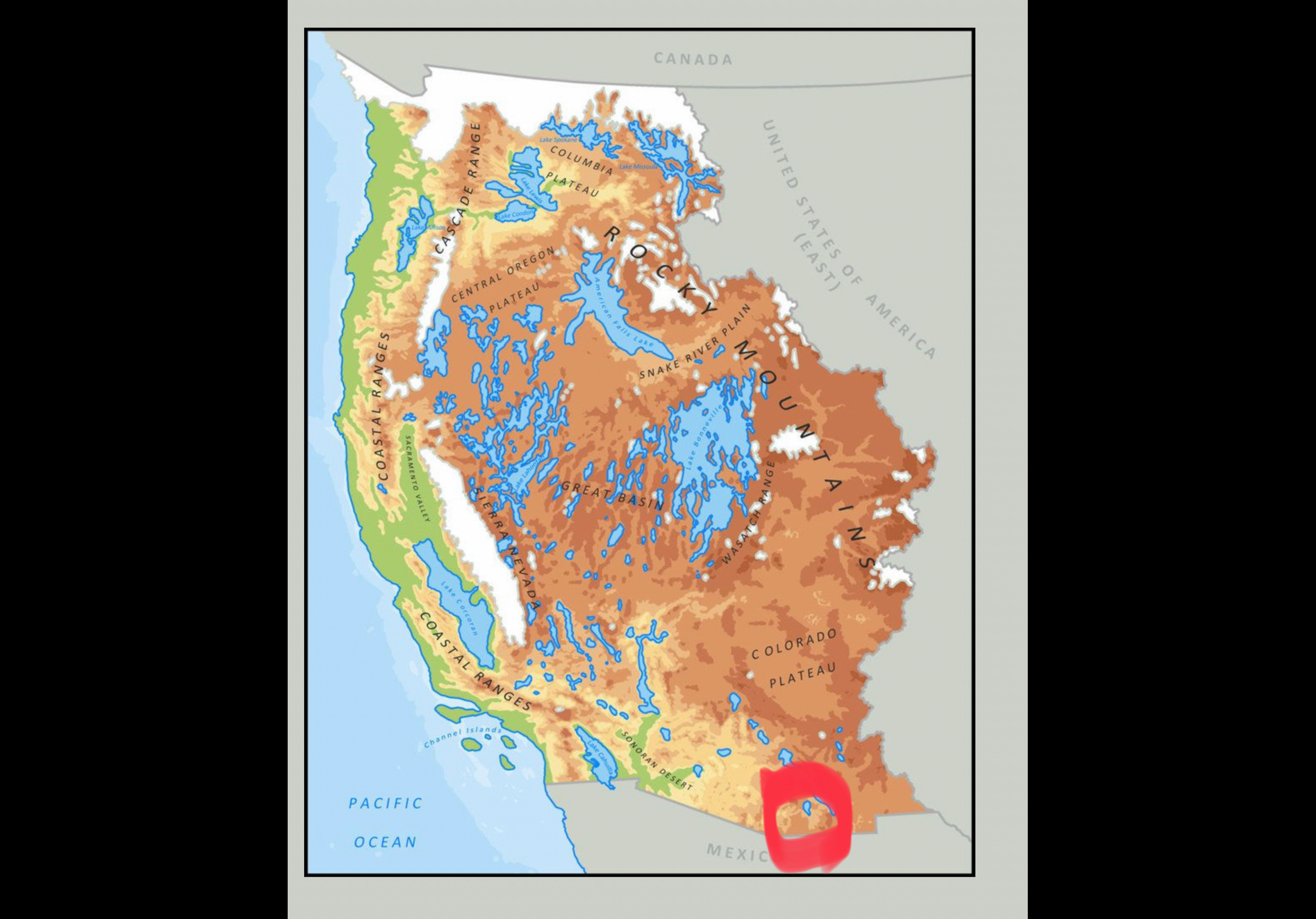
Figure 2. Ice Age lakes during the Pleistocene Epoch. Red circle - pluvial Lake Cochise aka modern day Willcox playa.
Tiger beetles were widespread along the shores of the various Pleistocene lakes, and as temperatures warmed and the lakes grew smaller or vanished because of evaporation or the loss of their glacier fed sources of water, populations of the animals became restricted to smaller and smaller habitats, with the result many became isolated from each other. Over time, some Cicindela populations became extinct, while others survived and even evolved into different species or subspecies.
Willcox Playa
The 50 square mile Willcox playa, a now sparsely vegetated dry desert lake, is a mere shadow of its Pleistocene self - formerly known as Lake Cochise, which was 119 square miles in size and up to 46 feet deep. Willcox playa is located a few miles south of the Town of Willcox in southeastern Arizona, at an altitude of about 4,000 feet.
The triangular shaped playa is in the closed Willcox basin surrounded by five mountain ranges. Like other aquifers in southern Arizona, the Willcox basin can be thought of as a big bathtub supplied only by subsurface waters draining down from the surrounding mountains. However, it may take hundreds or even thousands of years for water to move from higher altitudes to the basin. In addition, during the summer monsoons, rainfall creates shallow pools and ponds on the surface of the playa which evaporate during the hot dry months.
Willcox playa has maintained suitable environment conditions for tiger beetles despite increasing aridity and the fact that the surrounding impassable mountains effectively isolate the basin from sources of immigrant Cicindela. The dry lake is important habitat for not only tiger beetles, but also large numbers of wintering sandhill cranes and migratory birds.
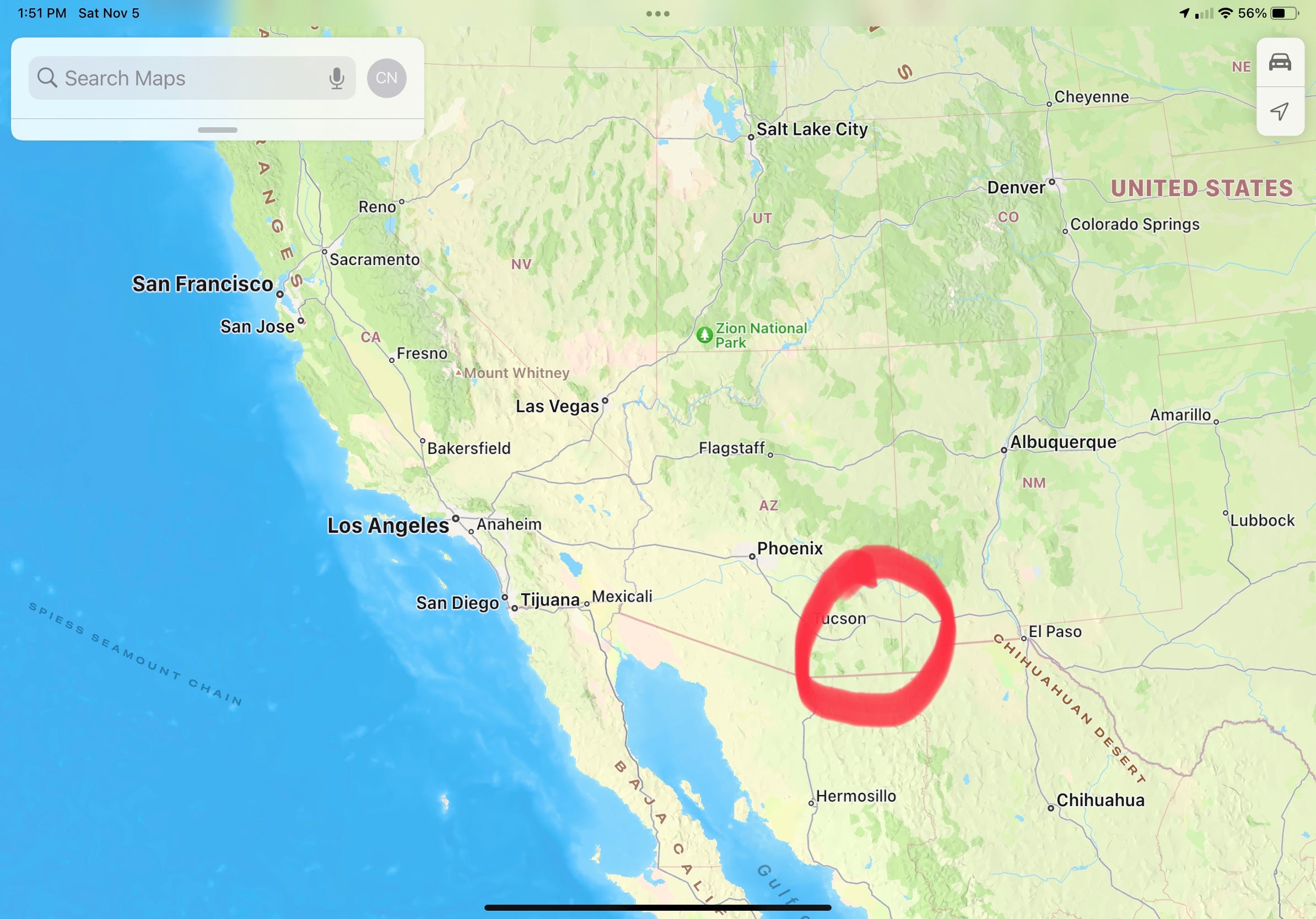
Figure 3. Southwestern United States of America and northwest Mexico. Red circle = Willcox Basin
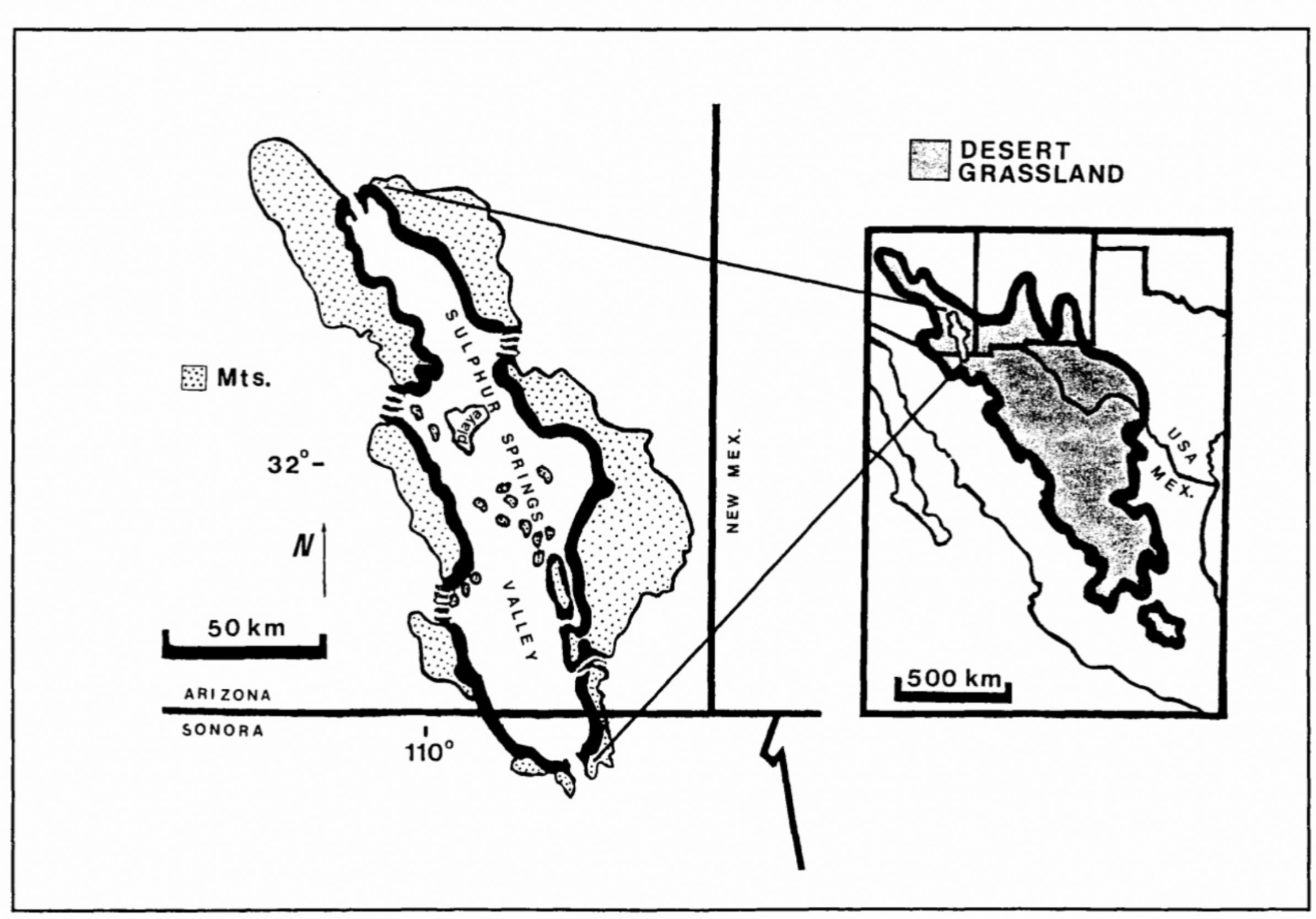
Figure 4. Sulphur Springs Valley in Cochise County, Arizona. The north half of the Sulphur Springs Valley is the Willcox basin, the southern portion is the Douglas basin. The “playa” in the map on the left is Willcox Playa.
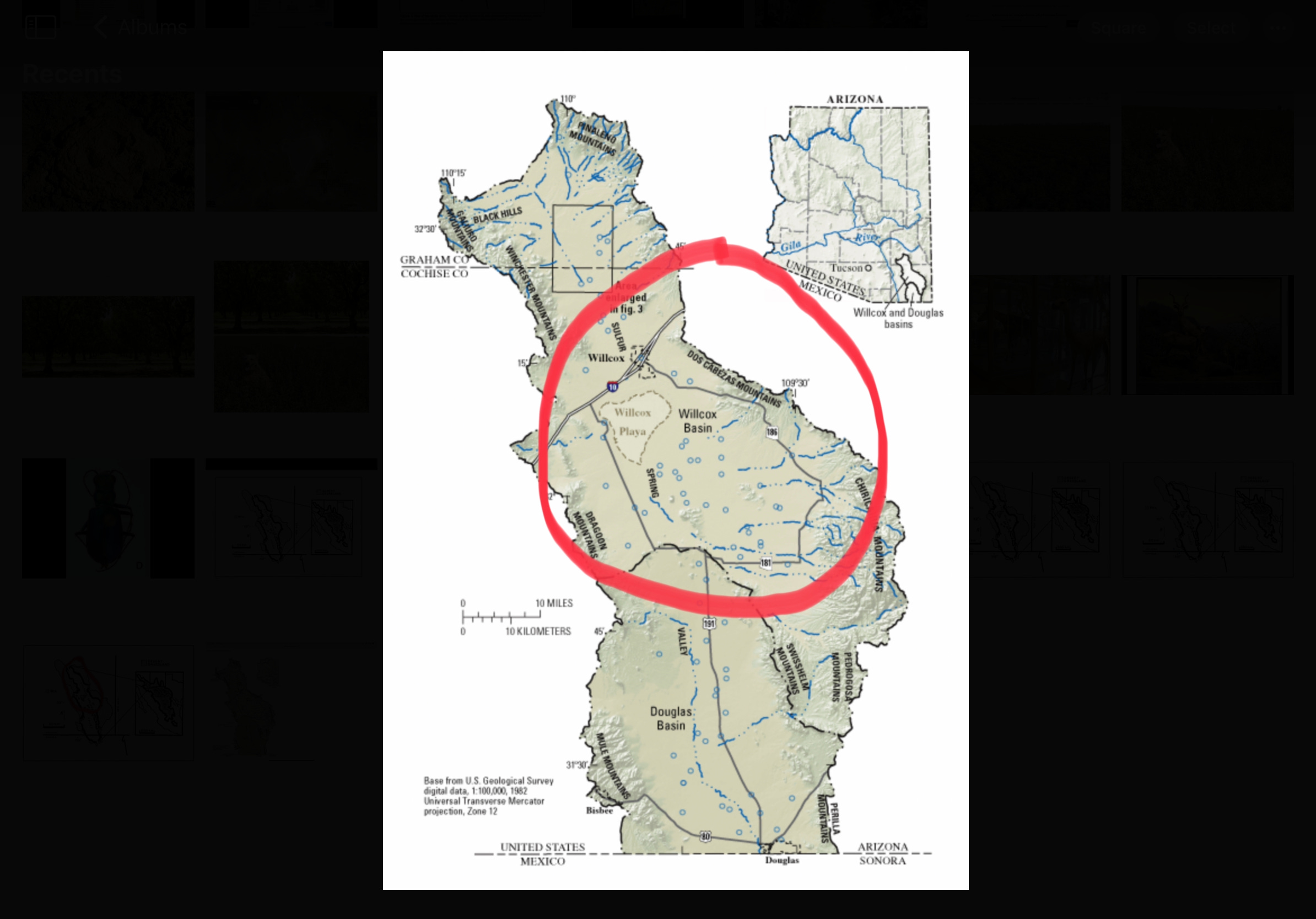
Figure 5. Sulphur Springs Valley showing the 1,911 square mile Willcox Basin on the north side and the Douglas Basin on the south side
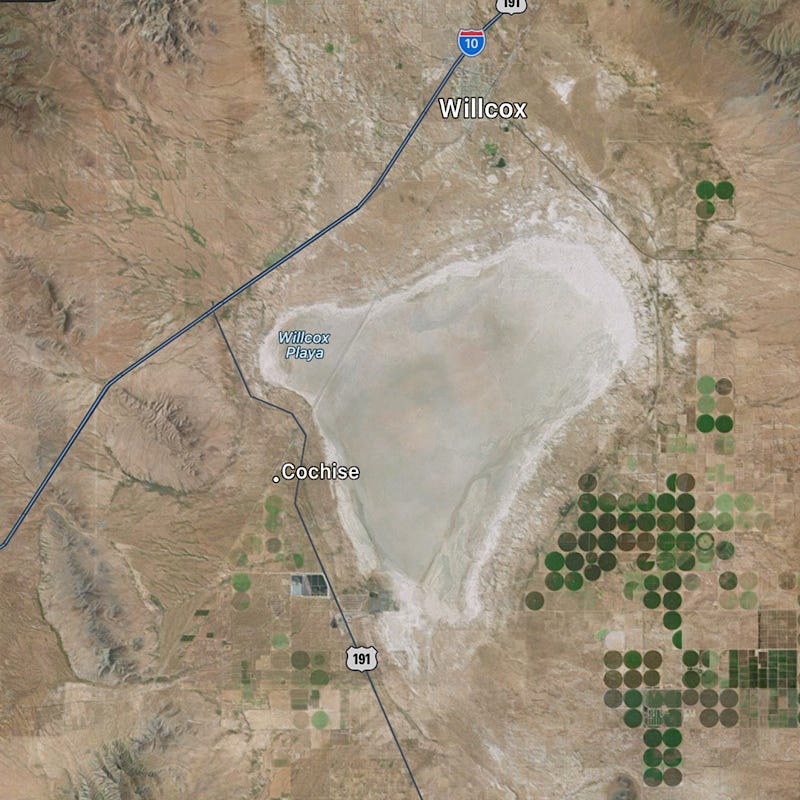
Figure 6. Aerial photo of the Town of Willcox and Willcox playa. The grayish triangular shaped object is the Playa. The large green circles are center-pivot irrigation providing water to what is likely alfalfa. This older aerial photo doesn’t show all the currently existing commercial agriculture and CAFOs in the area.
Emergence of adult tiger beetles at Willcox playa is dependent on rain and soil moisture. Several species only occur near standing water or on moist or muddy soil. After summer monsoon rains, many hundreds or even thousands of individual adults representing as many as 11 different species of Cicindela may be observed concentrated around some of the same temporary pools and ponds. Other tiger beetle species inhabit dry upland habitats often miles from water. A few species are found over a continuum of dry and wet areas.
Human activities that affect the critical moisture and humidity levels required by soil dwelling Cicindela larvae have significant effects on the animals’ successful development and survival. Unlike the adults, the subterranean larvae are prone to desiccation due to water loss through their thin highly permeable cuticle or skin, especially in dry areas like the Willcox basin. The larvae obtain water from the bodies of their prey, or by extracting it from the soil, either by drinking water that collects in the spaces between soil particle and/or ingesting wet soil and then absorbing the water through their digestive tracts. Arid desert dwelling larvae will dry out and die unless subsurface water tables are close enough to the surface for their burrows to reach depths with adequate moisture levels.
Tiger beetles found only in the Willcox Basin
One of the two Cicindela restricted to the Willcox Basin is the Willcox Playa tiger beetle, whose scientific name is Cicindela fulgoris erronea. It was named by the late Patricia Vaurie, a well known entomologist who worked at the American Museum of Natural History, based on specimens collected on the playa in the late 1940s. The Willcox Playa tiger beetle has been observed at 10-15 locations on the dry lake, primarily the edges of temporary and permanent ponds within a mile or so of the edge of the playa. It inhabits open ground with sparse or no vegetation near the water’s edge on mud, salt and alkaline flats in the north side of the lake bed.
The larvae of the Willcox Playa tiger beetle have been observed to decrease their activity levels during the hottest part of the summer day when they plug their burrows with soil, almost certainly to reduce dessciation. Interestingly, many of the locations used by the adults for foraging do not support the larvae since most of these areas dry up after the summer monsoons. Information from insect collectors and tiger beetle specialists indicate the Willcox Playa tiger beetle is much less common and abundant than it was several decades ago.
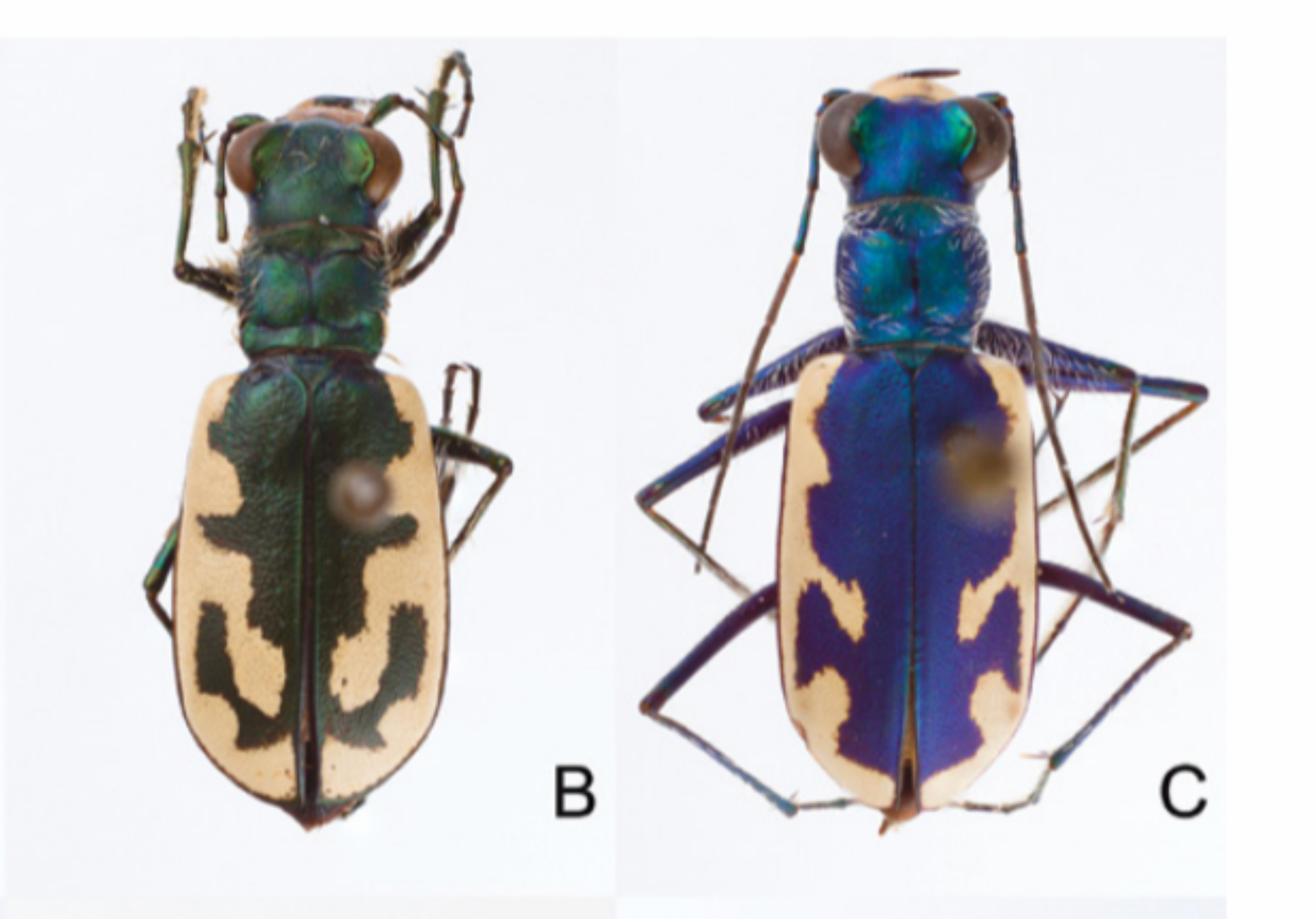
Figure 7. Sulphur Springs tiger beetle (left) and the Willcox Playa tiger beetle (right)
The other Cicindela restricted to this Valley is the Sulphur Springs tiger beetle (Cicindela willistoni sulfontis). It has been abundant on the southeastern and southern portions of the Willcox playa, but tiger beetle specialists have indicated few or no animals have been recently observed. The adults become active on lacustrine salt and alkaline flats at the start of the summer monsoons. The larvae inhabit saline soil which is always damp or wet just below the surface. They construct distinct turrets of soil over their burrow entrances to attract prey and decrease burrow temperatures. The Sulphur Springs tiger beetle is a subspecies of Cicindela willistoni; which is widespread in arid western North America and comprises several subspecies restricted to playas and desert hot springs.
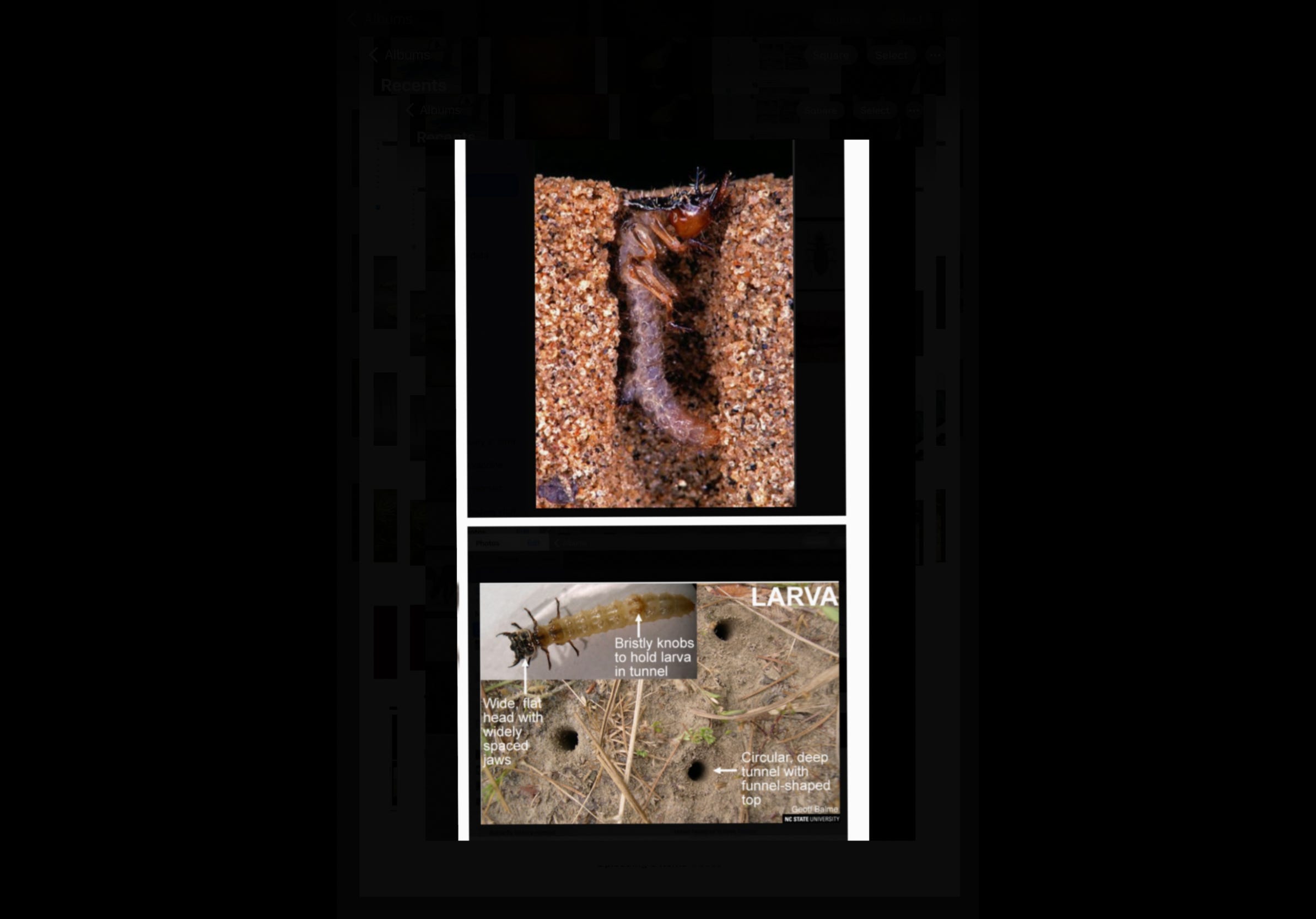
Figure 8. Upper photo - Larva tiger beetle in its vertical subterranean burrow. Lower photo - Characteristic larvae burrows
Threats to the Tiger Beetles of the Willcox Basin
Large scale agricultural activities in the Willcox basin are virtually certain to eliminate or significantly reduce the surface and subsurface waters essential for creating and manning suitable habitat for adult and early stage tiger beetles. As massive amounts of ground water continue to be pumped for commercial use, the level of the aquifer drops, which often alters, deforms, and destabilizes the surface of the ground. This could render these areas too dry, lack proper prey species, and not provide the relatively flat habitats with smooth unbroken surfaces required by tiger beetles. In some areas of the Willcox basin, deep fissures which are enormously wide sometimes several feet, and hundreds or even thousands of feet long have opened up on the surface due to depleted underground water.
Before large scale agriculture began in Willcox basin in the 1940s, some hydrologists have concluded groundwater levels could have supplied the City of Tucson for 970 years. Between 1940-2015, 6.2 million acre-feet of groundwater was pumped from the Willcox basin, reportedly subsurface water levels dropped by 200-300 feet in some areas. In 2015, water users pumped about 240,000 acre feet - about 4 times what the Willcox basin gets annually in recharge. The Arizona Department of Water Resources estimates by 2115, up to 24 million acre feet of subsurface water will be pumped out of the basin, and they predict groundwater levels will fall by as much as 917 feet in some areas.
The depletion of ground water in the Sulphur Springs Valley is caused by mega-dairy CAFOs and water intensive large scale commercial farms growing tree-nuts, alfalfa, and other crops. One CAFO located close to the Willcox Playa has 9,000 cows, 120,000 heifers, and has drilled nearly 80 water wells, most are at least 1,000 feet deep, and three are close to half a mile deep. It is unknown how and where the thousands of gallons of urine, tons of feces, and other waste material from the CAFOs are treated and disposed. Wells also supply the vast amounts of water needed for thousands of acres planted with nut-trees and alfalfa in the Willcox basin.
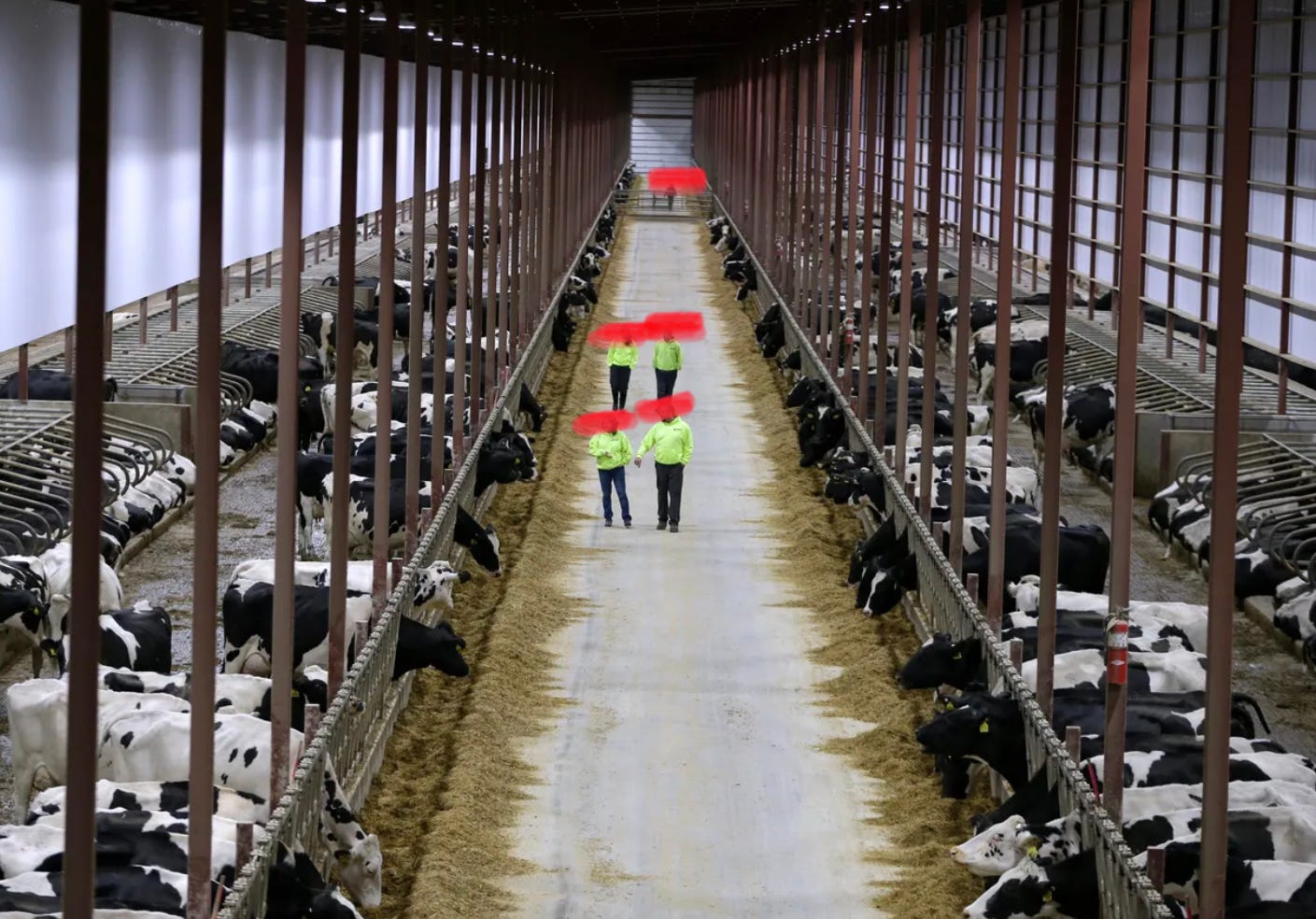
Figure 9. Dairy cows in concentrated animal feeding operation. Note- this facility is not in Arizona

Figure 10. One dairy cow reportedly may produce as much as 65 pounds of poo and 3.5 gallons of pee a day. Using these figures, a CAFO containing 9,000 dairy cows would result in 108,000 tons of poo and 11,497,500 gallons of urine a year. How and where do the dairy farms disposed of the poop and pee?
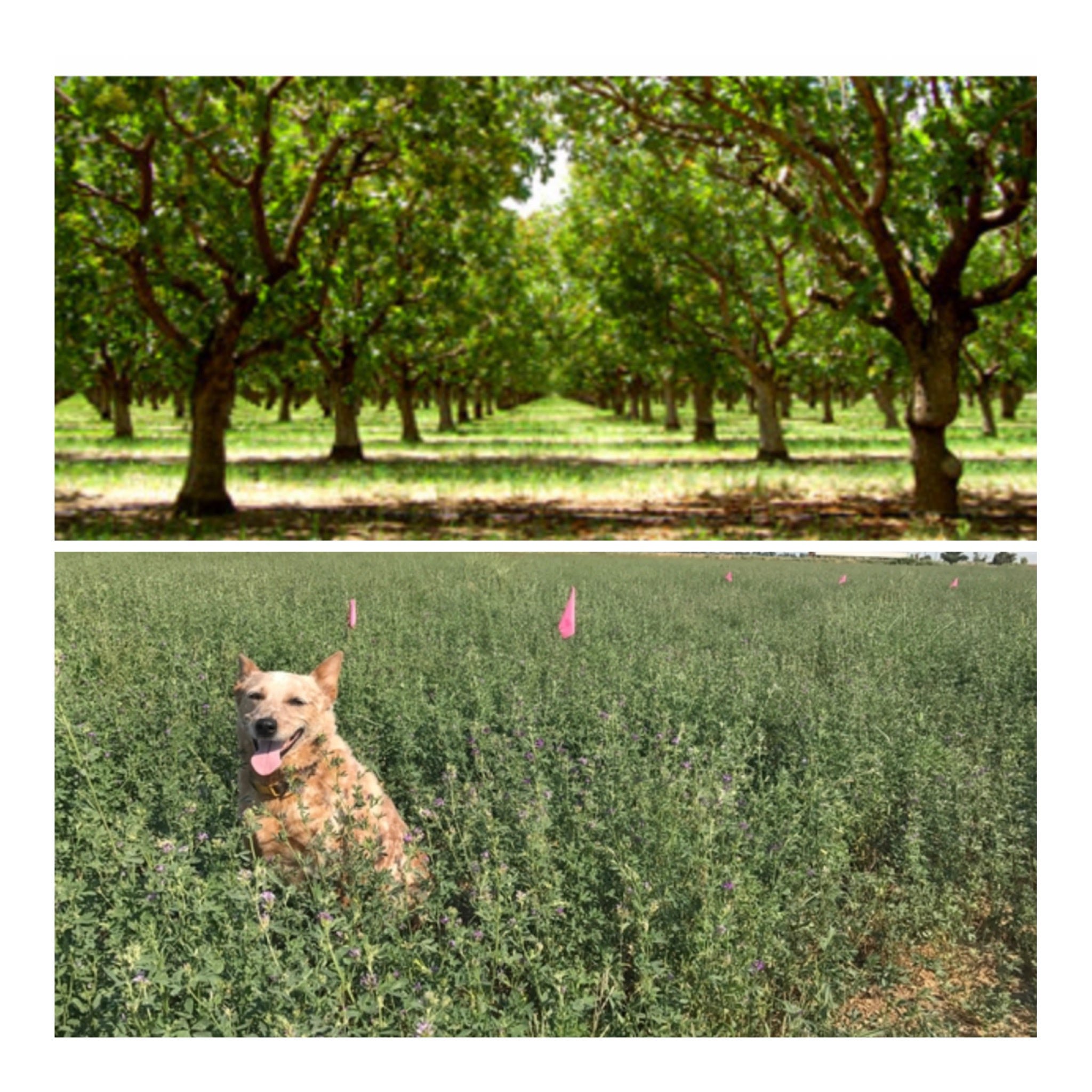
Figure 11. Top photo - orchard of pistachio nut trees. Bottom photo - field of alfalfa
The current total of water wells in the Willcox Basin is unknown, but estimates range as high 1,000 wells. Some water wells on existing small farms have gone dry and more are in jeopardy of going dry. Between January 2015 and November 2020, the State of Arizona received 898 notices of intent to drill or modify existing wells in the Willcox basin, compared to 494 received during the previous five year period.
Massive pumping of groundwater combined with hotter temperatures caused by global climate change is shrinking aquifers and lowering water tables in the Willcox basin. “The only reason the water tables are dropping is because more entities are pumping - because there are no rules,” explained Kristine Uhlman, a retired University of Arizona hydrologist. She also said “Too many entities have moved in to pump the free water. Take what you want; all you need is the money to drill, the deeper the better.”
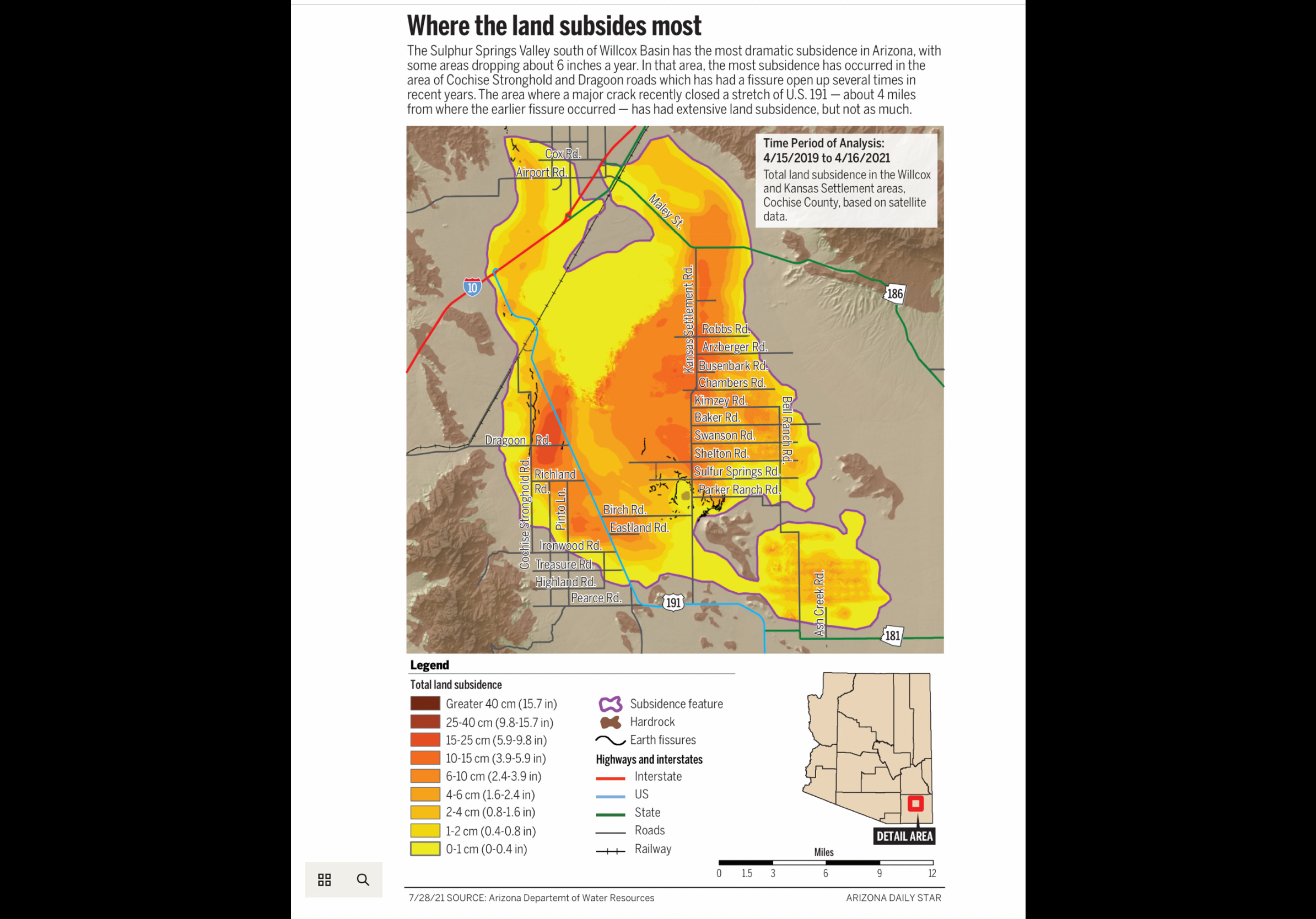
Figure 12. Map showing where and how the amount the land has subsided in the Willcox Basin
Not only are tiger beetles affected by overdrafting of groundwater, but so are the many humans who live in the Sulphur Springs Valley. In several areas, the groundwater supplying private drinking water wells has dropped precipitously or dried up completely after the CAFOs and commercial farming operations began extracting water. Currently, there are no regulations or restrictions on the amount of water that can be taken from subsurface sources. The Arizona State legislature has refused to protect the groundwater, even rejecting the idea of committee hearings on the issue. In the November 2022 election, a measure that would have created an Active Management Area for groundwater in the Willcox Basin failed to pass. Without any limits of the amount of ground extraction, the Sulphur Springs tiger beetle and the Willcox Playa tiger beetle will continue to be imperiled by extinction.
Unfortunately, there are other threats to the Sulphur Springs tiger beetle and the Willcox Playa tiger beetle besides groundwater depletion by commercial farming and CAFOs - large scale solar power farms, especially if they are constructed on or in the areas that will impact Cicindela or their habitats will be detrimental. Construction of the solar collectors, roads, power lines, and associated infrastructure will eliminate, degrade, and fragment habitat, introduce and create favorable conditions for invasive non-native plants and animals, and the spraying of herbicides or mechanical clearing of vegetation beneath the solar mirrors will degrade nearby ponds, pools, and alter moisture and ground water levels critical for the survival of tiger beetles.
Conclusion
The U.S. Fish and Wildlife Service should immediately list the Sulphur Springs tiger beetle and the Willcox Playa tiger beetle as endangered under an emergency basis on the Endangered Species Act. The status of these two species and the fact the threats pose an immediate threat of extinction to them fully justify an emergency listing pursuant to 50 CFR § 424.20. Willcox playa should be designated as critical habitat in order to protect the biological and physical features essential to their conservation. The USFWS should establish a National Wildlife Refuge containing Willcox playa and the water sources supplying it for the tiger beetles, wintering sandhill cranes and migratory birds. An Active Management Area should be immediately established for the Willcox Basin which includes accurate measurement of groundwater levels and limits its extraction by CAFOs, large scale farming, and other human activities so the two tiger beetles, wintering whooping cranes, wildlife and their habitats are not affected by the loss of this finite natural resource
References
Acciavatti, R.E. 1980. A review of Cicindela praetexata from the southwest United States (Coleoptera: Cicindelidae). Southwestern Entomologist 5(4): 231-244.
Allhands, J. 2022. Groundwater is running out in rural Arizona. Is that enough for voters to step in? Arizona Republic March 31, 2022.
Arizona Daily Star. 2017. Big solar farm going up near Apache power plant outside of Willcox. Tucson.com September 22, 2017
Audubon Society. Undated. Important bird areas Willcox Playa/Cochise Lakes, Arizona
Campaign, A. 2022. Two areas in rural Arizona might finally gain protection of their groundwater this year. Inside Climate News. April 7, 2022.
City of Willcox, Arizona. Undated. 2040 General Plan. Adopted date: TBD. Willcox, Arizona.
Davis, T. 2021. Mega-dairies, disappearing wells, and Arizona’s disappearing water crisis. Guardian June 2, 2021
_____ 2022. Overpumping causing AZ land to sink dramatically where highway crack opened. Guardian March 26, 2022
Duran, D.P. and H.M. Gough. 2020. Validity of tiger beetles as a distinct family (Coleoptera: Cicindelidae) review and classification of tribal relationships. Systematic Entomology 45: 723-729
Frederick, J. 2022. Cochise County voters approve one groundwater management plan, reject another. Arizona Republic November 10, 2022
Grodsky, S.M., J. W. Campbell, and R.R. Hernandez. 2021. Solar energy development impacts flower-visiting beetles and flies in the Mojave Desert. Biological Conservation 263(2021): 109336
Hendrickson, D. And M.L. Minckley. 1985. Cienegas: vanishing climax communities of the American Southwest. Desert Plants 6(3): 131-175
Jackson, S, 2022. Willcox to vote on its water future in November. News 4 Tucson KVOA.com. October 31, 2022.
Jaskula, R. And M. Plociennik. 2020. Water is needed to exist: habitat preferences of tiger beetles (Coleoptera: Cicindelidae) in a desert country. Insects 11, 809
Johnson, W. 1977. Collecting Cicindela during the middle of August in the southwestern United States. Cicindela 9(1): 17-19
_____. 1978. Collecting in central and southwestern United States during mid-August, 1976. Cicindela 10(2): 27-30
Knisely, C.B. 2011a. Habitats, food resources, and natural enemies of a community of larval Cicindela in southeastern Arizona (Coleoptera: Cicindelidae). Canadian Journal of Zoology 65: 1191-1200
_____ 2011b. Anthropogenic disturbances on rare tiger beetle habitats: benefits, risks, and implications for conservation. Terrestrial Arthropod Reviews 4: 41-61
Knisely, C.B., M. Klippenhan, and D. Brzoska. 2014. Conservation status of United States tiger beetles. Terrestrial Arthropod Reviews 7: 93-145.
Knisely, C.B. and D.L. Pearson. 1984. Biosystematics of larval tiger beetles of the Sulphur Springs Valley, Arizona. Description of species and a review of larval characters for Cicindela (Coleoptera: Cicindelidae). Transactions of the American Entomological Society 110(4): 465-552
Larochelle, A. and M. Lariviere. 2001. Natural history of the tiger beetles of North America north of Mexico. Cicindela 33(3-4): 41-122
Lawton, J.K. 1974. Notes on cicindelid collecting in the southwestern United States, summer 1971. Cicindela 6(3): 45-65
Loving, J. E. And J.R. Entente. 2011. Wildlife conservation and solar development in the desert southwest. Bioscience 61(12): 982-992.
Meinzer, O.E. And F.C. Kelton. 1913. Geology and water resources of Sulphur Spring Valley. Arizona. U.S. Geological Survey Water Supply Paper 320
Myscofski, M. 2022. ‘A mini-Grand Canyon’: desert opens up as aquifers decline in Cochise County. Cronkite News July 11, 2022
Jeff, T. J. 2020. Major solar field coming to northern Cochise County. Arizona Daily Independent News Network. November 28, 2020
Nielsen, E. 2022. Wells are running dry in drought-weary Southwest as foreign-owned farms guzzle water to feed cattle overseas. CNN November 5, 2022
Pearson, D.L., C.B. Knisely, D.P. Duran, and C.J. Kazilek. 2015. A field guide to the tiger beetles of the United States and Canada: identification, natural history, and distribution of the Cicindelidae. Oxford University Press, New York, New York
Pearson, D.L. And E.J. Mury. 1979. Character divergence and convergence among tiger beetles (Coleoptera: Cicindelidae). Ecology 60(3): 557-566
Rosen, P.C., S.S. Sartorius, C.R. Schwalbe, P.A. Holm, and C. H. Lowe. Herpetology of the Sulphur Springs Valley, Cochise County, Arizona. Pages 65-80 in The future of arid grasslands: identifying issues, seeking solutions. Proceedings of the Symposium. U.S. Forest Service RMRS-P-3
Rumpp, N.L. 1977. Tiger beetles of the genus Cicindela in the Sulphur Springs Valley, Arizona, with descriptions of three new subspecies (Coleoptera-Cicindelidae). Proceedings of the California Academy of Sciences Fourth Series 41: 169-82
Schneider, K. 2022. Arizona faces a reckoning over water. High Country News March 17, 2022
Schreiber, J.F. 1978. Geology of the Willcox playa Cochise County, Arizona. Pages 277-282 in J.F. Callender J. Wilt, R.E. Clemens, and H.L. James editors. Land of Cochise (southeastern Arizona). New Mexico Geological Society 29th Annual Fall Conference Guidebook
Schultz, V.B. 1957. A history of Willcox, Arizona, and environs. Master’s thesis, university of Arizona, Tucson, Arizona
Thompson, J. 2020. As temperatures rise, Arizona sinks. High Country News April 1, 2020
Vaurie, P. 1950. Four new species of the genus Cicindela (Coleoptera, Cicindelidae). American Museum Novitates 1458
_____. 1951. Five new subspecies of tiger beetles of the genus Cicindela and two corrections (Coleoptera, Cicindelidae). American Museum Novitates 1479
Weingarten, D. And T. Davis. 2021. A mega-dairy is transforming Arizona’s aquifer and farming lifestyles. High Country News August 1, 2021
Williams, A.P., E.R. Cook, J.E. Smerdon, B. I. Cook, J.T. Abatzolou, K. Bowles, S.H. Baek, A.M. Badger, and B. Livneh. 2020. Large contribution from anthropogenic warming to an emerging North American megadrought. Science 368: 314-318
Willis, H.L. 1967. Bionomics and zoogeography of tiger beetles of saline habitats in the central United States (Coleoptera: Cicindelidae). University of Kansas Science Bulletin 47(5): 145-313
_____ 1972. Species density of North American Cicindela. Cicindela 4(2): 29-34
Wildland fires and the Nokomis Fritillary
Hi Chris.
I hope to communicate with you. I haven't heard back from my BlueSky DM so far, so trying this.
The following text is from an email the I sent to agencies, orgs, and lepidopterist friends. However, all of the links are missing in this text body box.
I hope to get some conversions going about the following topic about wildland fire management and the conservation of the Nokomis Fritillary.
The "Forsyth Fire," near St. George, may have wiped out the pupated population or Nokomis Fritillaries. My concern for the population, came to thought a couple of days from evacuating my Pine Valley dispersed campsite. The Forsythe Fire is 99% contained. Resource Advisors (READs) have been in contact with me. I've requested a Burned Area Emergency Response assessment (BAER). I'll reach out to them again, to remind them, as well as to assist with butterfly identification, remotely; or if they allow, I could be present to search, though the area is closed to public for the season. They are aware that this population is not protected with ESA, but I'm trying to get all Argynnis nokomis legally protected.
The "France Canyon Fire," West of Bryce Canyon, is contained and the perimeter maps shows that Nokomis pupae, host, and nectar-sources are unscathed.
The "Deer Creek Fire," came near the only population that I know of, of the ESA listed Nokomis Fritillary that is extant of the "Paradox Metapopulation." The habitat, appears to been unscathed, according the READ and the perimeter map. However, the 6.2 acre "Horse Thief Fire," south of Pine Ridge/Ray Mesa, have the SSW winds in its favor, to spread to the Old La Sal population. Looking at the heat map, I'm not seeing fire growth, so hopefully full-suppression has contained it.
The "Turner Gulch Fire," near the ESA listed Unaweep Nokomis population, may have burned some of the pupae, according to the perimeter map, but there should be survivors that have host and nectar available. Insects respirate; so smoke can do real harm. During cooler-still evenings, the Unaweep Canyon likely suffers heavy smoke inversion. The fire is 54% contained, and the heat map shows fires well away from the canyon that has ample black, to prevent north spread by spot fires.
If it had been an early monsoon, these fires would have been of benefit. Especially through the brush and Ponderosa forest.
I've been upset about the "Bravo Dragon Fire," at North Rim Grand Canyon. It's a place that I'm personally connected to. The butterfly count was going to be on 19 July!
If I hadn't of been sick, delaying my move to Jacob Lake area, I may have been incinerated by the "White Sage Fire.", since that was my intended dispersed camp area. Instead, I'm at 9100' below Cedar Breaks, which is very bad on my vestibular condition. SoI've been my sitting in the trailer, with my thoughts, rather than exploring. I have felt the need to speak-out about misinformation, and my protective feelings about the NPS fire fighters. Wildland Fire was a part of my own NPS life. These days, it seems that conspiracy theories have sometime out-competed reason. You may have seen the mass email or link to my SubStack article. I recieved a phone call from my Republican Congressman's Chief of Staff, Brian Wheet for Rep. Celeste Malloy. He was former USNFS out of Pocatello and Helitack. He texted a link to the comedian Bill Burr's interview about the LA fires last year. I sent him a link to an interview with the wildfire historian, Stephen Pyne.
A non-profit international animal advocacy organization "Friends of Animals," has reach out for my "wisdom" about the Nokomis Fritillary, since they are seeking critical habitat protections for the species. I understand the implications for "take," but with the unforeseen removal of wetlands from the Clean Water Act the same year as the species' listing, the Nokomis Fritillary is a "flag-ship" species that could help with some habitat protections. These protections however, are absent for private property, if I understand the ESA Critical Habitat definition. I hope to compel them to consider all Argynnis nokomis in the US. My Spanish is incredible poor, but it would be good to get protections for the MX populations as well. When I squint at Google Earth coordinates, the populations in Chihuahua, Durango & Zacatecas, all seem to have nearby habitat modification threats.
Since these things have been on my mind, I posted my "Silverspot Confusion" article
on SubStack.
I've attempted to pass on these expert opinions from myself to others that I clearly better suited. My assumption, is that they were interested in my passions, not just knowledge. Since Friends of Animals is suing the USFWS, they cannot seek much from federal staff, including contractors and volunteers. I would certainly be glad to get your input; Signal: dunewalker.50
IMG_6686.PNG
Xerces Society (Kevin Burls) may begin proposal for ESA protection to the localized A. nokomis ssp. carsonensis, but is also considering ssp. apacheana. Currently, they do not have staff out this far east, to do much with survey and monitoring.
Chris Nagano, would be wonderful ESA and butterfly expert to communicate with. Coincidentally, he had friended me on BlueSky the last conversation that I had with Friends of Animals. Chris is retired USFWS earlier on, then he had since worked then retired from the Center For Biological Diversity. When Chris was still with the USFWS, he was their butterfly taxonomist. He had worked along with Special Agent Mendoza, on a years-long deep-cover investigation of the illegal trade of US and Internationally protected butterflies. David Quammen an excellent essay about it. I have yet to hear back from Chris.
Good Monday afternoon to you, or whenever you read this.
Robbie Hannawacker
Retired US NPS Park Ranger Naturalist
Signal dunewalker.50
Disturbing news…why so many heifers?